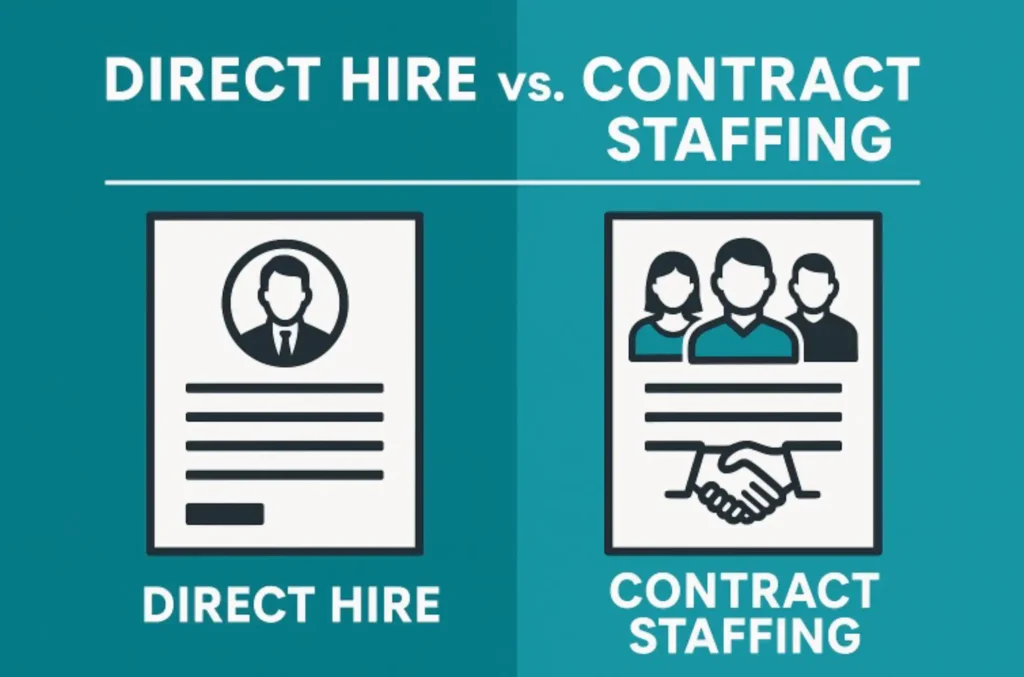
Hiring the right talent is critical to your business’s success. But beyond finding the right person, there’s another important decision: how should you hire them? Two of the most common options are direct hire and contract staffing. Both serve different needs and come with their own sets of advantages.
If you’re not sure which one is best for your current goals, this guide breaks down the key differences in simple terms to help you make a confident, informed decision.
What Is Direct Hire?
Direct hire refers to bringing an employee on board as a permanent member of your team from day one. These roles often include benefits, career development paths, and long-term investment from both the employee and the employer.
This route is ideal for:
- Filling critical, long-term roles
- Building leadership or specialized teams
- Strengthening your company culture with committed team members
Think of direct hire as planting a tree—you’re in it for the long haul, and you expect that investment to grow.
What Is Contract Staffing?
Contract staffing, also known as temporary or contingent staffing, brings in professionals for a defined period or project. These workers may be employed by a staffing agency and placed on assignment with your company, or they may be independent contractors.
This is a smart choice when:
- You have short-term projects or seasonal demand
- You’re covering for an employee on leave
- You need specialized expertise quickly and for a limited time
Contract staffing is more like renting a power tool—you get what you need, when you need it, without a long-term commitment.
Pros and Cons at a Glance
Direct Hire often results in higher upfront costs (recruitment, onboarding), but offers long-term value. Employees are more likely to be invested in the company’s success, and retention tends to be higher.
Contract Staffing offers agility and cost-efficiency. It allows you to scale quickly and reduce long-term obligations, but it may come with higher turnover and less integration into your company culture.
How to Choose What’s Best for You
Start by evaluating your business goals:
- Are you trying to fill a permanent skills gap or just need short-term support?
- Do you have time and resources to onboard and train a full-time hire?
- Is flexibility more important right now than long-term stability?
Your answers can guide the best staffing solution. In many cases, a blend of both models works well. For example, you might use contract staff to manage a product launch and hire direct for roles critical to future growth.
Final Thoughts
Choosing between direct hire and contract staffing isn’t just about timelines and budgets—it’s about aligning your workforce with your business strategy. Each option has its place, and understanding when and how to use them can give your organization a competitive edge.
Still unsure? Partnering with a trusted staffing agency can help you assess your current needs and create a hiring plan that supports both immediate goals and long-term vision.
Need help figuring out the right hiring model for your next role? Contact us to start the conversation.