The world of hiring is changing faster than ever. In 2025, the most forward-thinking employers aren’t just adjusting job ads—they’re reimagining how to attract, engage, and retain top talent. Whether it’s redefining job structures, tapping new skill pools, or adapting to the post-pandemic workplace mindset, staying competitive means understanding the forces reshaping recruitment.
Here are five key hiring trends every employer should be paying attention to this year.
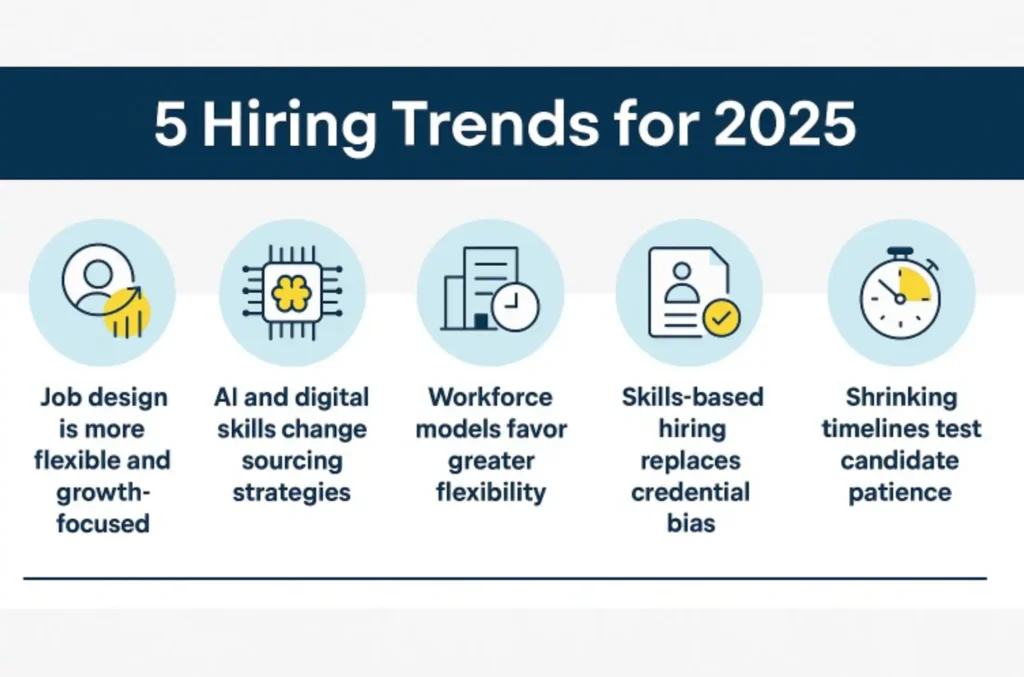
1. Job Design Is Becoming More Flexible and Growth-Focused
Today’s employees aren’t just looking for a job—they’re looking for a journey. Rigid, static job descriptions are falling out of favor, replaced by roles that offer clarity, flexibility, and room to grow. Candidates are drawn to employers that promote internal mobility and career development from the start.
Companies are responding by rethinking how roles are structured. Instead of hiring for narrowly defined positions, they’re designing opportunities that adapt to evolving skills and priorities. Offering clear pathways for advancement and skill development is becoming a key recruitment and retention differentiator.
2. Demand for AI and Digital Talent Is Reshaping Sourcing Strategies
Across nearly every industry, the demand for digital fluency and AI literacy continues to rise. It’s no longer just about hiring software engineers—roles in sales, operations, HR, and customer service are all being reshaped by automation and machine learning tools.
To meet this demand, employers are looking beyond traditional talent pipelines. Partnerships with boot camps, micro-credentialing programs, and upskilling platforms are helping companies access emerging talent. Many organizations are also investing in developing digital skills internally to reduce dependency on external hiring.
3. The Workforce Model Is Shifting Toward Flexibility
The 9-to-5, five-day workweek is no longer the default. Employers are rethinking work models to offer greater flexibility—whether that means hybrid schedules, condensed workweeks, or roles designed for freelance or fractional contributions.
This shift isn’t just about employee preference. Businesses benefit, too, from the ability to scale quickly and access specialized skills for short-term needs. Flexible workforce models are emerging as a critical lever for agility, especially in competitive and volatile sectors.
4. Skills-Based Hiring Is Overtaking Credential Bias
A quiet revolution is happening in how talent is evaluated. Increasingly, employers are prioritizing demonstrated skills over formal credentials. As the pace of innovation accelerates, degrees are no longer reliable proxies for ability—especially in tech, design, marketing, and operations roles.
Skills-based hiring emphasizes what candidates can do rather than where they went to school. Assessment tools, practical challenges, and portfolio reviews are becoming more central to the hiring process. This approach widens the talent pool and helps uncover high-potential individuals who might have been overlooked in a résumé-first system.
5. Hiring Timelines Are Shrinking—and So Is Candidate Patience
In a fast-moving market, slow hiring can cost top talent. Candidates today expect a streamlined, responsive process. Lengthy applications, unclear timelines, and multi-week delays are often deal-breakers—even for highly qualified professionals.
To stay competitive, companies are reengineering their hiring workflows for speed and transparency. This includes clearly communicating timelines, reducing unnecessary interview rounds, and leveraging tools that simplify scheduling and communication. The organizations that move quickly are the ones winning top-tier candidates—especially in high-demand roles.
Why These Trends Matter to Employers
Together, these five trends underscore how the hiring landscape is evolving. Employers that successfully adapt are building flexible job structures, investing in new talent sources, modernizing work models, shifting to skills-based hiring, and prioritizing speed and efficiency in their recruitment process.
These changes aren’t cosmetic—they’re structural. Organizations that resist risk falling behind, while those that evolve are building more dynamic, resilient, and future-ready teams.
Action Items for 2025 Hiring Strategy
- Redesign job descriptions to include growth paths and learning opportunities.
- Partner with upskilling providers to access and develop AI and digital talent.
- Evaluate your workforce model for opportunities to add flexibility.
- Implement skills-based assessments to reduce reliance on traditional credentials.
- Streamline hiring workflows and communicate clearly with candidates at every stage.